Sit-On-Top vs. Sit-In: Which Is the Best Fishing Kayak for You?
Choosing between a sit-on-top (SOT) and a sit-in (SI) fishing kayak is the most critical decision a new kayak angler will make. This structural choice directly impacts your safety, comfort, storage capacity, and ability to fish effectively in different weather conditions. While both styles will get you out on the water, they offer completely different on-water experiences.
This comparative guide breaks down the performance metrics, structural differences, and practical trade-offs of both hull designs to help you choose the perfect platform for your fishing style.
Direct Comparison Overview
| Feature | Sit-On-Top (SOT) Kayaks | Sit-In (SI) Kayaks |
|---|---|---|
| Seating Position | Above the water line on an open deck | Inside an enclosed cockpit below the water line |
| Primary Safety | Self-bailing via molded scupper holes | Requires manual pumping if flooded |
| Stability Level | High initial stability; excellent for standing | High secondary stability; leans into waves |
| Gear Access | Total freedom; complete access to open deck | Restricted to cockpit area and dry hatches |
| Weather Profile | Ideal for warm climates and hot summer days | Ideal for cold water, wind, and rain |
Deep Dive: Sit-On-Top Fishing Kayaks
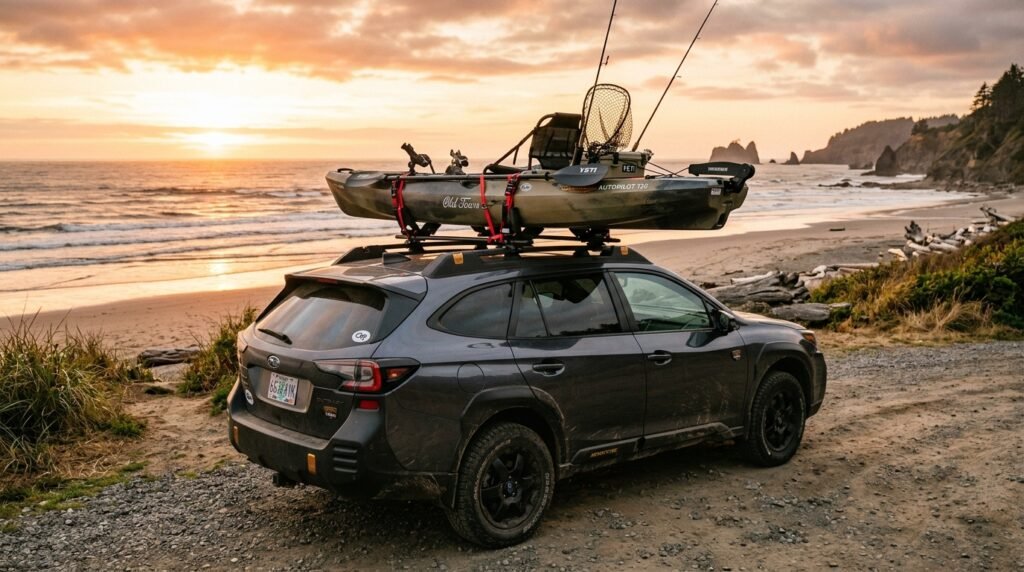
Sit-on-top kayaks feature an open-deck design where the angler sits on a raised seat elevated above the waterline. They are currently the most popular choice for modern kayak fishing due to their versatility and ease of use.
The Advantages
- Self-Bailing Safety: SOT hulls feature molded drainage holes called scupper holes. Any water that splashes onto the deck from a wave drains straight out the bottom automatically, making them virtually unsinkable.
- Stand-Up Casting Capability: Because you sit higher up, these models typically feature wider beams (31 to 35 inches). This design offers incredible initial stability, allowing you to stand up safely to cast lures, sight-fish, or stretch your legs.
- Unmatched Customization: The open deck provides ample space to install gear tracks, anchor trolleys, fish finders, and specialized camera mounts. Your tackle boxes, coolers, and bait buckets sit right in front of or behind you for instant access.
- Easy Deep-Water Re-entry: If you accidentally flip an SOT kayak, you simply flip it back over and climb back on top from the side. You do not have to swim a water-filled boat back to shore.
The Drawbacks
- You Will Get Wet: Because the deck is completely open, wind-driven spray, paddle drips, and passing waves will make contact with your body.
- Slower Paddle Speeds: The wide hulls required to give SOT kayaks their rock-solid stability create more water resistance, making them heavier and slower to paddle over long open distances.
Deep Dive: Sit-In Fishing Kayaks
Sit-in kayaks feature an enclosed cockpit hull where your lower body slides inside the frame of the boat, resting closer to the actual bottom of the vessel.
The Advantages
- Climate Protection: The enclosed cockpit shields your legs, hips, and core from chilly morning winds, cold water splashes, and rain. You can also attach a nylon spray skirt to seal out the elements completely.
- Superior Speed and Efficiency: Sitting lower down drops your center of gravity. This allows the manufacturer to design a narrower, sleeker hull that slices through water efficiently, requiring less physical effort to paddle long distances.
- Lightweight Construction: Because they don’t require heavy internal support walls to keep an open deck rigid, sit-in models are typically 10 to 20 pounds lighter than SOT models of the same length, making them easy to car-top alone.
- Lower Wind Profile: Sitting low inside the water means less of your body acts as a sail, helping you stay on course during windy days on open lakes or coastal flats.
The Drawbacks
- Swamping Risks: If a large wave breaks over the cockpit of an SI kayak, or if you flip over, the hull will fill completely with water. You must carry a manual bilge pump and a paddle float to empty the water out safely in deep water.
- Rigid Seating Position: You cannot easily shift your weight, swing your legs over the side to cool off, or stand up to fish. Your gear access is strictly limited to what you can fit between your knees or inside bulkheaded rubber hatches.
Which Should You Choose?
Choose a Sit-On-Top Kayak If:
- You plan to fish primarily during warm weather or in tropical climates.
- You want to stand up frequently to flip jigs or look down into the water.
- You carry a massive amount of gear, including large tackle crates and coolers.
- You fish in coastal waters, large surf, or areas where flipping over is a possibility.
Choose a Sit-In Kayak If:
- You plan to extend your fishing season into the cold autumn and early spring months.
- You need to paddle several miles across open water to reach your fishing spots.
- You have limited storage space or need a lightweight boat that is easy to load onto a roof rack.
- You fish primarily in calm rivers, secluded ponds, and protected bays where big waves are rare.